
Porcelain and ceramic: what is the real difference?
Both porcelain and ceramic tiles are made from clay that is shaped and fired in a kiln. The difference lies in the raw materials and the firing. Porcelain uses a finer, denser clay body and is fired at higher temperatures, which makes the finished tile harder and far less porous. Ceramic tiles use a coarser clay body and rely on a glaze on the surface for colour and protection.
The industry uses water absorption to draw the line: a tile is generally classed as porcelain when it absorbs no more than 0.5% of its weight in water. That single property explains most of the practical differences — how a tile behaves in frost, how it resists stains and whether it suits wet or outdoor areas.
Glazed, full-body and colour-body porcelain
Porcelain comes in several constructions. Glazed porcelain has a decorative surface layer over a dense body, which allows realistic stone, wood and concrete looks. Full-body porcelain carries the same material through its whole thickness, so chips are less visible in busy areas. Colour-body porcelain sits in between, with a body tinted close to the surface colour.
Porcelain vs. ceramic at a glance
| Porcelain | Ceramic | |
|---|---|---|
| Body | Fine, dense clay fired at a higher temperature | Coarser, lighter and more porous clay body |
| Water absorption | Very low — 0.5% or less by definition | Higher; the glaze protects the surface |
| Durability | Very hard-wearing, suits heavy foot traffic | Good for walls and light-traffic floors |
| Outdoor & frost | Suitable when the series is rated for exterior use | Generally not recommended outdoors |
| Installation | Harder to cut; needs the right tools and adhesive | Easier to cut, drill and lay |
| Formats | Small tiles up to large-format slabs | Mostly small and medium formats |
| Budget | Higher material and installation cost | Usually more economical |
| Best for | Floors, bathrooms, kitchens, terraces, pool areas | Walls, splashbacks, feature and decorative areas |
Neither tile is “better” in every situation. The right choice depends on where the tile goes, how the space is used and how the project budget is split between rooms.
Where to use each tile in a villa
Living areas and main floors
Living rooms, corridors and entrances take the most foot traffic and furniture movement. Porcelain is the safer choice here, especially in large formats that reduce grout lines and give an open-plan villa a calm, continuous look. Using the same series indoors and on the terrace visually extends the living room outside.
Bathrooms and wet rooms
Use porcelain on bathroom floors and inside showers, where water sits on the surface every day. Ceramic wall tiles remain a good option above the wet zone and behind vanities, where they add colour and pattern at a lower cost.
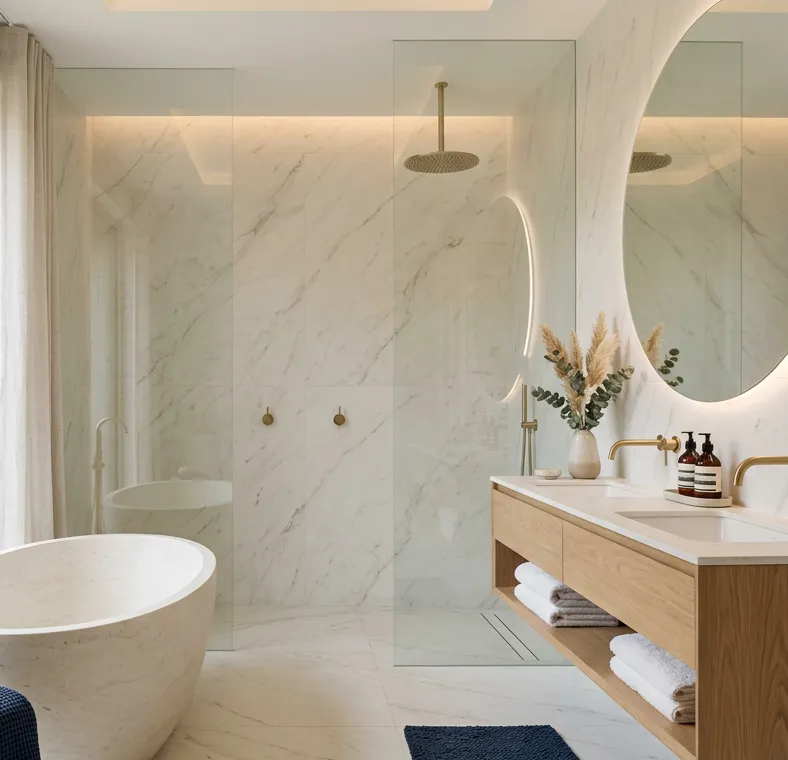
Large-format porcelain in a wet room (left) and exterior-rated tiles around a villa pool (right).
Kitchens
Kitchen floors must handle spills, dropped pans and frequent cleaning — porcelain again. For splashbacks, glazed ceramic offers the widest choice of colours, glossy finishes and handmade looks, and it is easy to cut around sockets and shelves.
Terraces, outdoor areas and pool surrounds
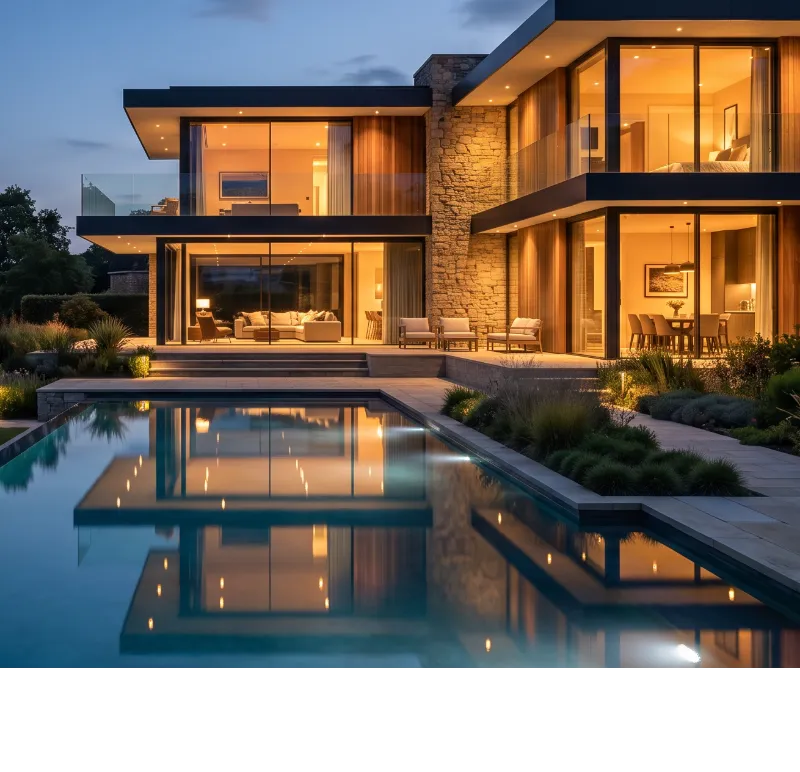
Outside, only choose tiles that the manufacturer specifies for exterior use. Porcelain with a textured or anti-slip finish is the usual choice for terraces, steps and pool surrounds; in cold regions, confirm frost resistance before ordering. Many ranges also offer thicker outdoor versions for raised or pedestal installations.
Feature walls
Walls carry no foot traffic, so this is where ceramic shines: textured, glossy, patterned or handmade-effect tiles for a fireplace, a powder room or a headboard wall.
Use porcelain where people walk and water stays; use ceramic where you want character on the walls.S-FUTURE Project Team
Finishes, formats and slip resistance
The surface finish changes both the look and the safety of a tile. Polished porcelain reflects light and suits dry living spaces; matt and satin finishes hide footprints and are easier to live with; textured or structured finishes add grip for bathrooms, entrances and outdoor areas. Ask for the slip-resistance rating of each finish and check it against the standards of your country — they differ from market to market.
Large formats look premium but need flat subfloors, careful handling and installers who are used to them. If the site team is less experienced, a medium format often gives a better final result.

Project manager’s tip
Order all the tiles for one area from the same production batch. Shade and size can vary slightly between batches, so we record batch numbers on the packing list and recommend keeping a few spare boxes for future repairs.
Ordering tiles for a whole villa
Tiles are heavy and bulky, so small planning mistakes become expensive once a container has left. Before you order:
- Measure each area from the drawings and add a cutting allowance — more for diagonal or herringbone layouts and for large formats.
- Group every tile in one schedule by room, with series, size, finish and quantity, so no area is forgotten.
- Order skirting, stair nosings, trims and outdoor pieces together with the tiles, so colours match.
- Confirm the packing: strong cartons, edge protection and pallets suitable for sea freight.
When tiles travel with cabinets, doors, sanitary ware and lighting, consolidation keeps everything in one delivery and one set of paperwork. Our import & shipping guides explain how that works.
Buyer’s checklist
 Before you confirm your tile order
- Tile type confirmed for every area: porcelain for floors, wet zones and outdoors
- Finish and slip resistance checked for bathrooms, entrances and terraces
- Exterior tiles confirmed as suitable for your climate
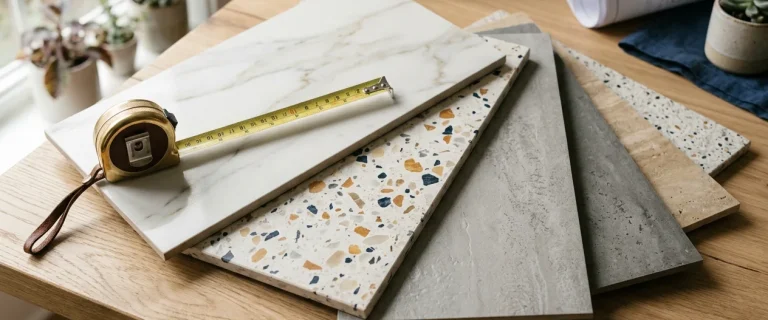
- Samples approved in daylight, next to your cabinet and wood finishes
- Quantities include a cutting allowance and spare boxes
- One production batch per area, recorded on the packing list
- Trims, skirting and steps ordered with the tiles
- Adhesive and laying method agreed with your installer
The short answer
Choose porcelain for floors, bathrooms, kitchens, terraces and pool areas — anywhere with heavy traffic, water or weather. Choose ceramic for walls, splashbacks and decorative features where you want more design options at a lower cost. And plan the whole villa in one tile schedule, so selection, quotation and shipping happen together.


Planning a villa project? Send us your drawings.
Our project team will suggest suitable tiles for every area and prepare an itemised quotation — floors, walls, bathrooms and outdoor spaces in one list, together with the rest of your materials.